Drawing · 02.3
The light pen
It does not draw on the screen — it listens to the screen, which is why it vanished the moment displays stopped scanning.
In this entry
- How a gun becomes a pencil
- Sutherland's pen and what it proved
- Why it stopped working
3 parts · Drawing 02.3
Photo: RazorArt asset kit
How a gun becomes a pencil
A cathode-ray tube does not show you a static image. It fires an electron beam that sweeps across the phosphor coating in a fixed sequence — line by line, top to bottom, sixty or more times per second. Each point on the screen glows briefly and then fades; persistence of vision does the rest. That relentless sweep is what a light pen exploits.
The pen is a hollow tube with a small photodiode or phototransistor at its tip. Press it to the screen's glass and it detects the brief flash of light that occurs the instant the electron beam passes beneath it. That electrical pulse is timestamped against the beam's known position — the scanning circuitry always knows where it is, because the horizontal and vertical deflection voltages are under precise control. The system correlates the moment of detection with those voltages, and out comes a coordinate: the point on the screen where the pen is touching. No stylus has drawn anything. No ink has moved. The screen has simply told the computer when and where it lit up under the pen.
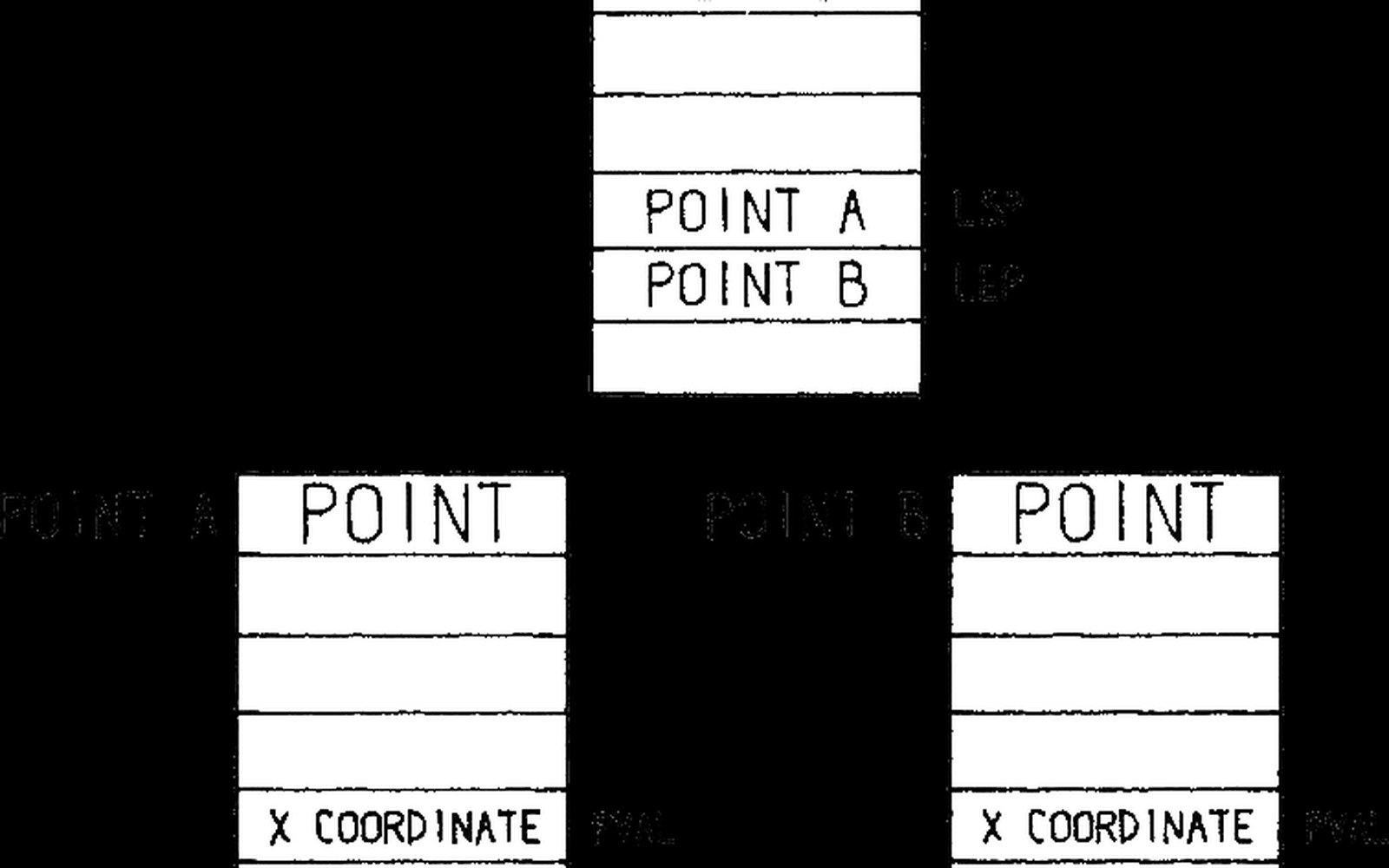
This is not reading position continuously; it is reading position once per frame, at the instant the beam arrives. The computer has to act on that coordinate fast enough to update whatever it is displaying — usually by moving a cursor or extending a line — before the next frame arrives and the user notices a lag. On the hardware of the early 1960s, this demanded careful programming and real timing discipline.
Sutherland's pen and what it proved
The light pen entered computing history as the input instrument for Ivan Sutherland's Sketchpad at MIT Lincoln Laboratory in 1963. Sketchpad, the subject of Sutherland's doctoral thesis, was the first system to let a person draw geometric objects on a screen, constrain their relationships, and manipulate them interactively. The pen selected points, drew lines, and grabbed objects for repositioning. Because Sketchpad ran on a TX-2 machine — a vector display, not a raster — the beam followed programmed line paths rather than a fixed raster grid, but the underlying detection principle was identical: the pen heard the beam pass.
Before Sketchpad, the light pen had already appeared in a military context. The SAGE air-defence network, operational in the late 1950s, used light pens to let operators select targets on its radar-derived vector displays. SAGE was enormous — a continental early-warning system using AN/FSQ-7 computers built by IBM for the US Air Force — and the light pen was its primary pointing device, years before the mouse existed. SAGE's interactive displays are documented among the formative interfaces of the era.
The RAND Corporation, in Santa Monica, California, also built tablet-based digitising systems in the same period, but the light pen remained dominant on vector screens because it needed no separate surface: the display itself was the input plane, which felt direct in a way that nothing else at the time could match.
It fires an electron beam that sweeps across the phosphor coating in a fixed sequence — line by line, top to bottom, sixty or more times per second.
Why it stopped working
The light pen's physics were also its ceiling. It depended on the brief, intense flash of phosphor emission from a scanning beam — which meant it required either a vector display drawing programmed paths or a raster CRT with high enough phosphor brightness to trigger the photodetector reliably. When Richard Shoup's SuperPaint and subsequent raster systems used framebuffers driving standard broadcast monitors, the pen could still work in principle, but the signal was weaker and the round-trip timing harder to exploit cleanly.
LCD panels finished it. A liquid-crystal display has no beam, no sweep, no flash of phosphor. Every pixel is lit continuously from a backlight transmitted through a shutter. There is no event for the photodetector to detect. The light pen is not merely impractical on a flat panel — it is physically impossible, because the operating mechanism does not exist.
What replaced it — the mouse, the graphics tablet, eventually the capacitive touch layer — all measure position by their own means, independent of what the display is doing. That decoupling, which felt like a loss of directness at first, turned out to be the architecture that survived.

Related in Drawing