Drawing · 02.4
Vector displays
Before the raster, the beam traced lines — and the result was a sharpness that bitmaps spent years trying to equal.
In this entry
- The beam follows the instruction
1 parts · Drawing 02.4
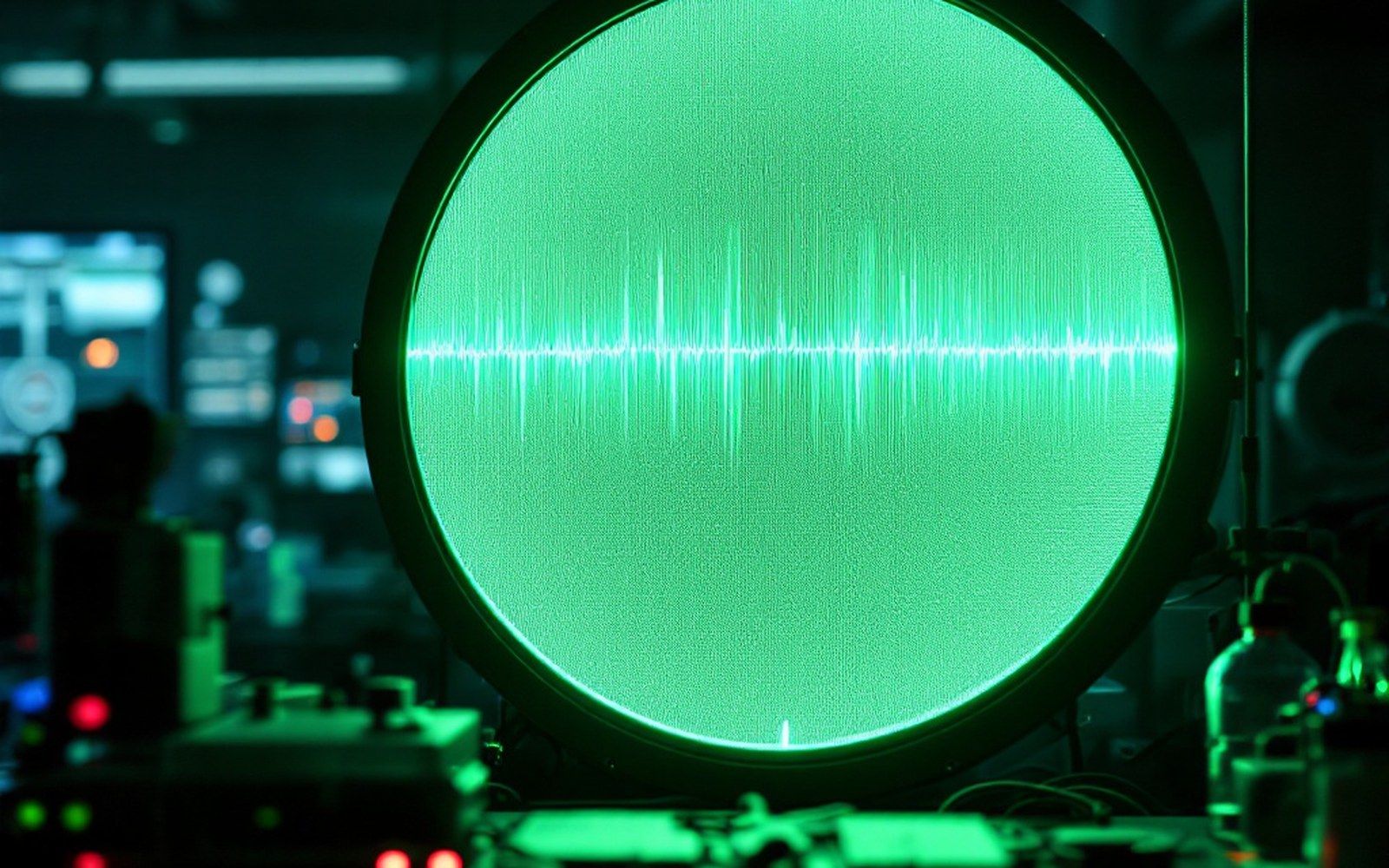
Photo: RazorArt asset kit
The beam follows the instruction
A raster screen divides the image into rows and floods them left to right, top to bottom, sixty times a second, whether anything interesting is happening or not. A vector display — also called a calligraphic or stroke display — does something different: it steers the electron beam only where lines actually exist, tracing each one as a single continuous movement before jumping to the next. No grid, no pixel addresses, just voltage curves driving the beam across phosphor.
The technology descends from the oscilloscope, where two voltages deflect a beam on orthogonal axes to draw arbitrary waveforms. Early computer graphics adopted exactly this principle. At MIT Lincoln Laboratory in the 1950s, the Whirlwind computer drove a vector display for real-time radar plotting, and the engineers discovered the characteristic virtue of the approach: because the beam traces the full analogue path of each line, the result is geometrically sharp in a way that rasterising later had to laboriously recover.
Ivan Sutherland's Sketchpad (1963), running at MIT on a TX-2 computer, was demonstrated on a vector display, and the quality of its lines was part of what made the system convincing. The RAND Corporation's RAND Tablet used vector screens alongside its digitising hardware; RAND's Santa Monica engineers were drawing circuit diagrams and maps on them by the mid-1960s. For a decade, any serious interactive draughting — aerospace, semiconductor layout, air-traffic control — lived on vector tubes.
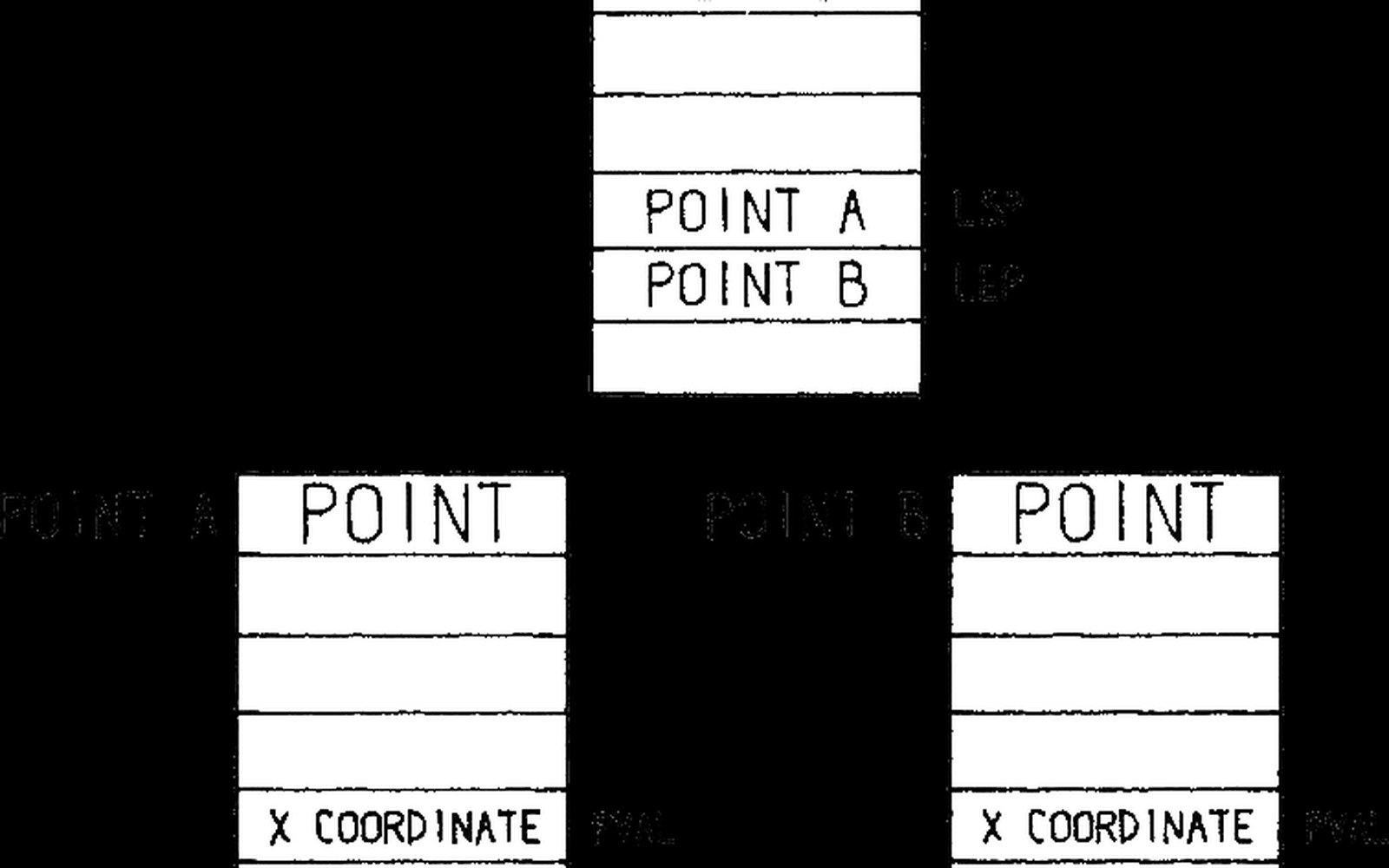
The limitation was structural. The phosphor persists only briefly, so the display list — the list of line segments the computer sends to the beam controller — must be redrawn continuously, typically at 30 to 50 Hz. A display list with many lines flickers; add enough geometry and you outrun the refresh rate. Raster screens, by contrast, hold their image in a framebuffer regardless of scene complexity, and once memory became cheap enough, the framebuffer's advantages overwhelmed the vector tube's sharpness.
By the early 1980s, raster framebuffers were the norm. Vector displays survived in specialist niches — military cockpits, some arcade games such as Asteroids (1979) — but the phosphor market collapsed. The sharpness problem they had solved without effort became a problem for rasterisation to solve through anti-aliasing, a family of techniques that has been refining its answer ever since.


Related in Drawing