Drawing · 02.2
Constraints
A constraint is a rule the geometry must obey, not a position you happened to record — and the difference changes what drawing software can do.
In this entry
- The instruction that outlasts the stroke
- Degrees of freedom and the solver
2 parts · Drawing 02.2
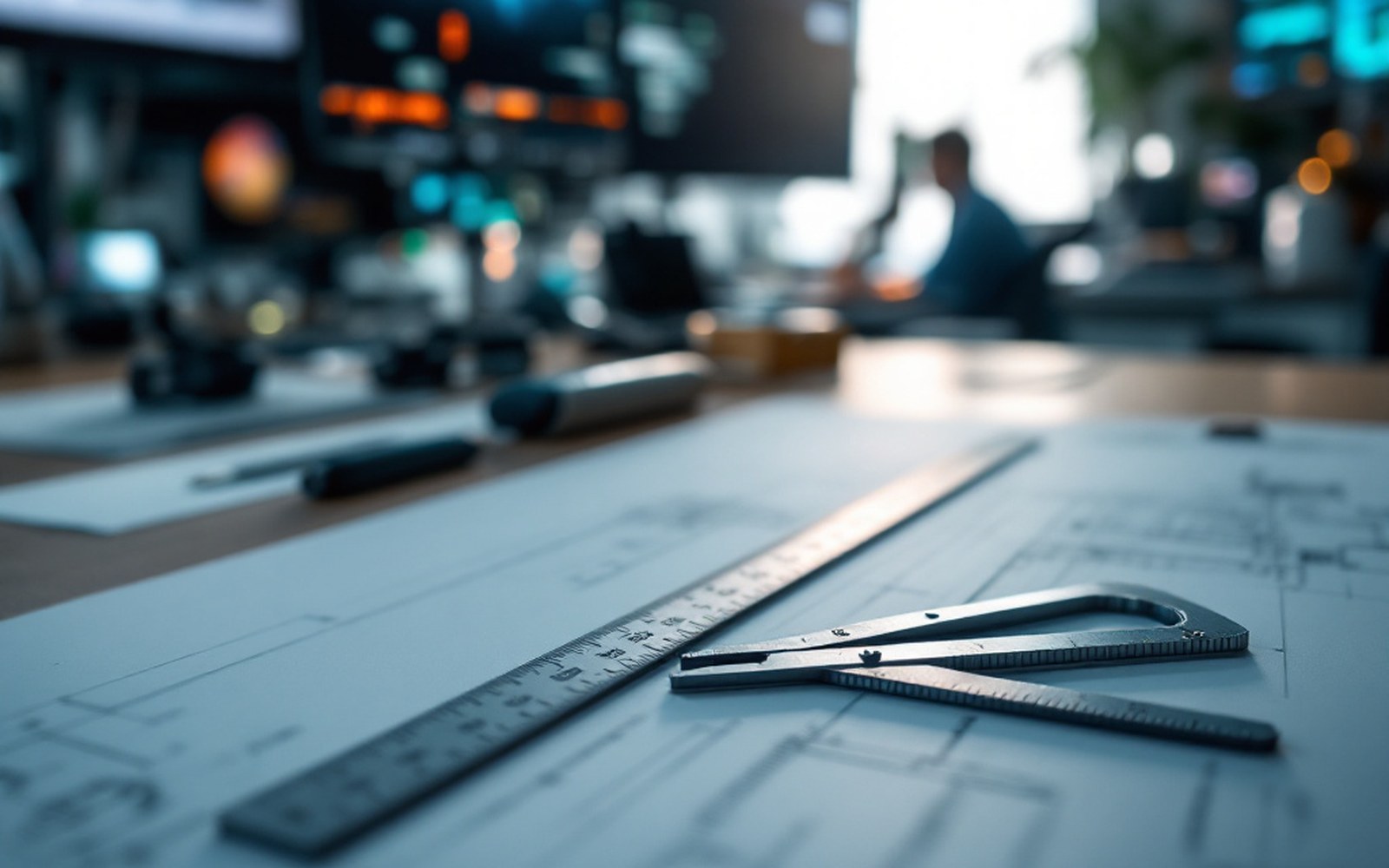
Photo: RazorArt asset kit
The instruction that outlasts the stroke
When you draw two lines at right angles, you are recording coordinates. When you constrain those lines to be perpendicular, you are writing a relationship that holds even after you move one of them. The distinction is as old as mechanical drawing: a draughtsman reaching for a set square is applying a constraint by hand, forcing the pencil into compliance with a rule rather than trusting muscle memory to approximate it.
Ivan Sutherland's Sketchpad, developed at MIT Lincoln Laboratory in 1963, is where this idea entered software. Sutherland's doctoral thesis introduced the constraint as a first-class object: a line could be declared horizontal, two circles could be told to remain tangent, a point could be pinned to another figure. The drawing engine then solved for the positions that satisfied all active constraints simultaneously. This was not snapping — snapping moves a coordinate to a nearby grid point and forgets the decision. A constraint is persistent; it propagates. Pull a vertex and every dependent element moves with it, the whole figure bending to stay legal.
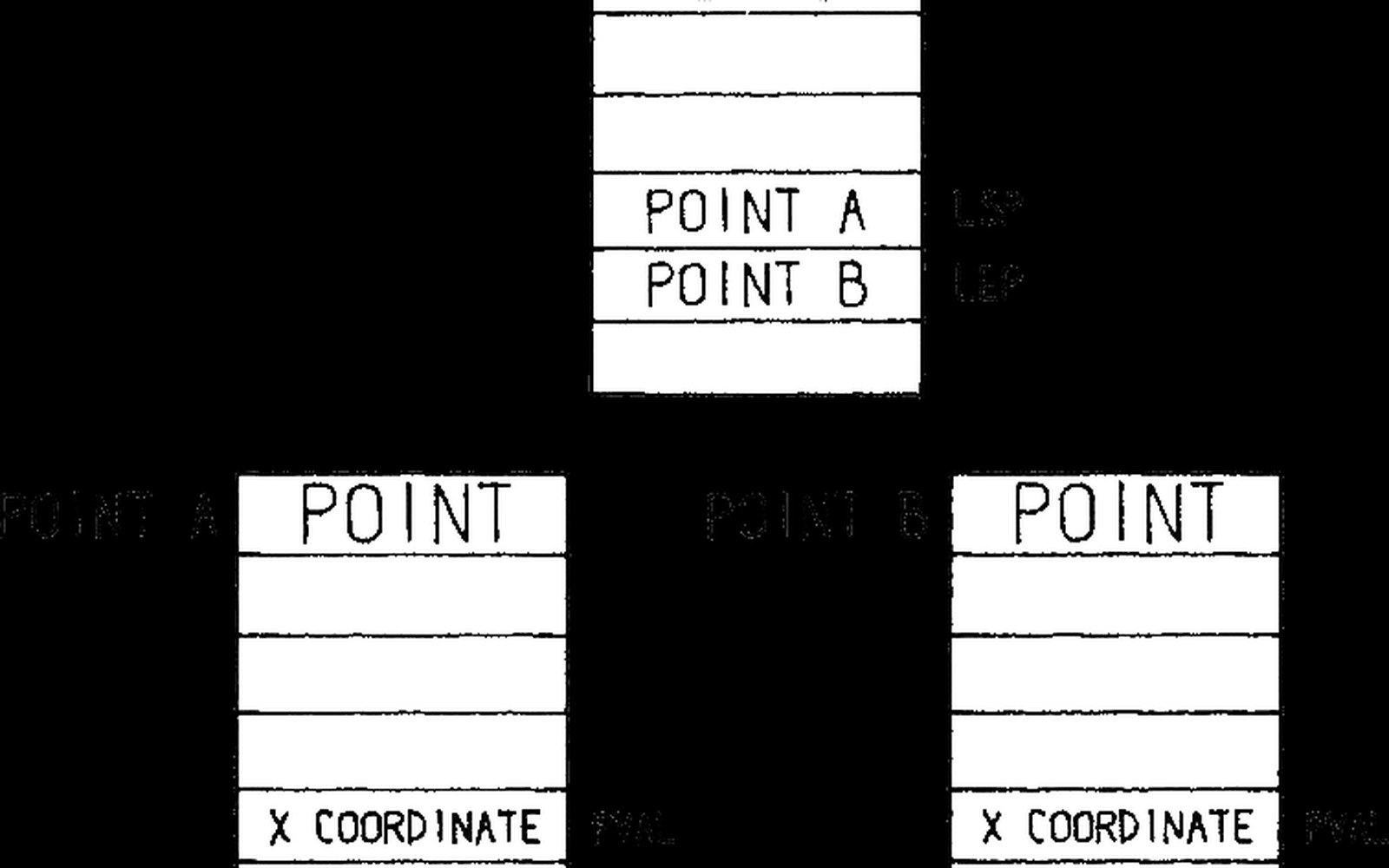
The mechanism Sutherland used was a constraint-satisfaction loop: the system held a set of equations, one per rule, and iterated until residual errors fell below a threshold. Small drawings converged quickly; larger ones exposed a problem that has never fully gone away — constraint systems can be underdetermined (too few rules, so the geometry wanders), overdetermined (contradictory rules, so no solution exists), or simply slow to converge when the equation count grows. The art of a constraint modeller is not writing rules; it is writing just enough rules, in the right order.
Degrees of freedom and the solver
Every free point in a plane has two degrees of freedom: it can move in x and y independently. Every constraint removes at least one. A horizontal constraint on a line segment removes one degree (the two endpoints are now coupled in y). A fixed-length constraint removes another. Fully constrain a figure and it becomes rigid — you can translate or rotate it as a body, but no internal relationship can change. This accounting, familiar to mechanical engineers who design linkages and mechanisms, is exactly what a constraint solver is managing.
The solvers in production CAD systems — and eventually in vector illustration tools — typically decompose the constraint graph into smaller subproblems, solve each, and stitch the results together. Algebraic solvers handle polynomial systems; geometric solvers exploit special-case rules (two lines declared parallel can be resolved without a general solver at all). Hybrid approaches have dominated since the 1980s because no single strategy handles every real drawing efficiently. The throughput matters: a user dragging a handle expects the figure to follow at frame rate, which means the solver must finish in milliseconds, not seconds.
What changed between Sutherland's research prototype and tools designers actually use was not the mathematics but the interface. Constraints needed to become legible — visible in the drawing as small icons or coloured indicators — and they needed to be forgettable in a productive sense: you declare a rule and stop thinking about it, trusting the engine. That invisibility, when it works, is the point. The control polygon of a spline curve, where handles exert influence without lying on the curve itself, is a related idea: the interface element and the geometric result are deliberately separated, and the rule connecting them runs silently.
Perpendicularity, tangency, coincidence, symmetry, equal length — these are the vocabulary. But the deeper concept is that drawing software can model intentions, not just marks. A sketch with constraints knows that this angle is deliberate and that distance is not. When dimensions change, the intent survives. That is why parametric constraint solving became the backbone of industrial CAD long before it appeared in the tools artists use — the engineering drawing was always a specification, not a picture, and constraints are how a specification stays consistent as numbers change.
The set square externalised a rule. Sutherland internalised it. Everything after is refinement of that shift.
When you draw two lines at right angles, you are recording coordinates.


Related in Drawing